![AI Tinkerers St. Louis: June 2026 Meetup [AI Tinkerers - St. Louis]](https://sloppy-joe-app.imgix.net/ai_tinkerers/logos/ai_tinkerers_-_st_louis_laptop-sticker_190_f7c8636f5266b115e5360cd826bd3636.png?w=300&fit=max&auto=format%2Ccompress&q=75)






AI Tinkerers St. Louis: June 2026 Meetup


![(Photo) A photograph capturing an indoor business meeting or presentation where a speaker stands before a whiteboard and two screens, addressing an audience seated in modern, comfortable lounge furniture. The room features unique architectural elements, including wooden ceiling slats, exposed beams, and a large vertical moss or plant wall. Text: EXIT o World. Perspectives Synthesize Customer [unreadable] Product Development Better Support BRIAN CELLARD AUTHORIZATION A[unreadable] A corporate meeting or training session | Indoor, modern office or event space | A presenter addressing an audience; vertical garden wall; exposed industrial ceiling elements; multiple display screens. | Candid, documentary | Colors: #A9A8A2, #704214, #3E603F, #FFFFFF Note: This image is a realistic capture of a real-world scene (a business meeting), utilizing lighting and perspective characteristic of a photograph rather than a drawn or digitally rendered illustration.](https://sloppy-joe-app.imgix.net/blog_images/pxl-20251022-223405768-jpg-SaRD.jpg?w=1400&auto=format%2Ccompress&q=85)
AI Tinkerers St. Louis: June 3, 2026
Join us for the next St. Louis gathering of AI Tinkerers on Wednesday, June 3, 2026. This is a technical show-and-tell environment where engineers, researchers, and developers share working code and navigate the challenges of the agentic internet.
AI Tinkerers is a curated network for active builders. We prioritize implementation details, architectural trade-offs, and live systems over slide decks or marketing pitches. Whether you are working with multimodal “omni” models like Gemini 3.1 Flash or local execution breakthroughs like Bonsai 8B, this is the place to pop the hood and show your stack.
Schedule
| Time | Activity |
|---|---|
| 5:00 PM | Doors Open & Networking |
| 6:00 PM | Community Demos & Technical Q&A |
| 7:00 PM | Networking & Science Fair |
| 7:30 PM | Event Concludes |
What to Expect
Attendees are screened to ensure the room is filled with practitioners who can discuss code, configs, and prompt engineering strategies. Expect short, live demos that reveal the messy realities of building with LLMs. We welcome fragile prototypes and half-baked experiments that teach us something new about the “how” behind the build.
Drinks and light snacks will be provided by our host, Sketch.
Submit Your Demo Proposal
We are actively seeking technical presentations for the June meetup. Your demo should focus on a specific technical challenge and your solution. Demos are limited to 5-10 minutes of live code or working systems. No pitch decks allowed.
Submit Your Demo Proposal Here
🥽 Speakers
git-cli: Local LLM Git Helper

Asha Somayajula
Lead, Engineering @ CarNow Inc
Location & Registration
Registration is required and attendance is capped at 50 practitioners. Due to the high caliber of our builders and the technical density of the room, our events are very popular and space is limited.
The specific location at Sketch in St. Louis will be shared with accepted attendees via their confirmation email and QR entry code.
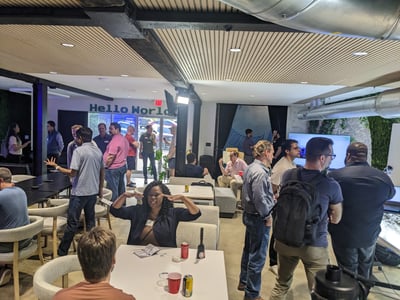
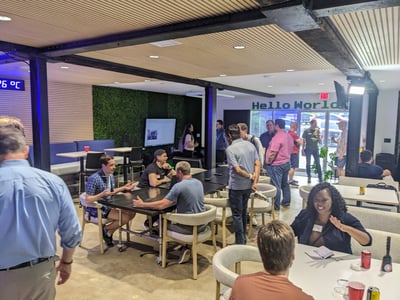
Event photos
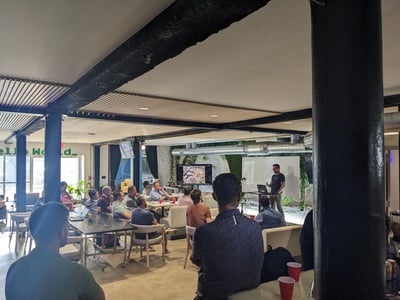
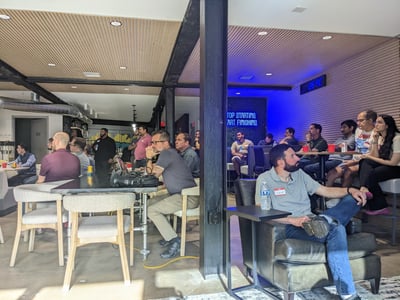
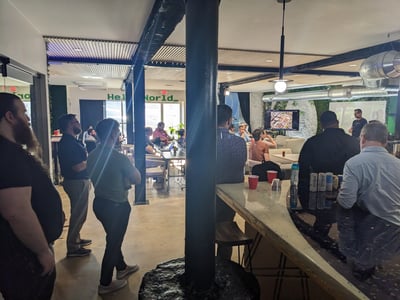
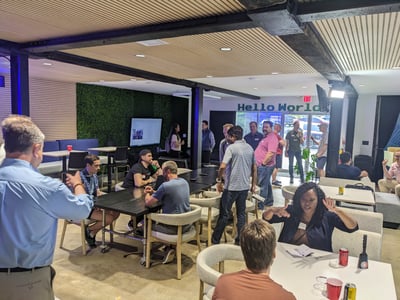
Sponsors
Sketch - Sketch Development Services is a St. Louis-based consultancy specializing in AI-enabled custom development, DevOps agility, and Lean product management. They focus on elevating how teams build software through hands-on coaching and technical expertise. With a 100% US-based team, Sketch helps organizations modernize delivery pipelines and adopt agile mindsets that stick.

Interested in supporting the St. Louis builder community? See sponsorship opportunities.
📊 AI Tinkerers St. Louis Stats
- Attendees: AI Tinkerers connects 253 elite technical professionals in St. Louis. The community consists of 80% full-stack engineers, 65% generative AI specialists, and 55% cloud architects. Distinguished by principal engineers from Mastercard and researchers from Washington University, members actively deploy production-grade agentic workflows, secure fintech integrations, and advanced agricultural data pipelines, establishing this group as the region's premier hub for applied artificial intelligence innovation.
- Companies Represented: Featuring tech giants and established leaders like IBM, Boeing, Mastercard, and Vercel, alongside innovative startups and specialized firms such as GitHub, Primordial Labs, Zipper, Virtenia, IgnitionAI, and more
- Demos: 23 demos have been submitted and 16 have been presented. The most exciting themes have centered on multi-agent and multi-LLM orchestration, productionizing AI with reliability/testing, and practical developer tooling. Technical discussions have frequently covered graph-based workflows, context management, deterministic harnesses, integration with backends/data sources, and specialized pipelines spanning computer vision, logistics, and finance-oriented extraction.
- Testimonials:
A great technical demo is one where the audience can clearly see working engineering: live code execution, tangible outputs, and lessons tied to specific problems you solved with LLMs/agents/local models. The highest-rated demos show that “narrow scope + real system + measurable or observable results” works—e.g., pipelines that process real data, harnesses that enforce boundaries and validation, or production systems that handle real workflows. Speakers should also respect the meetup constraint of “no pitch decks or marketing slides” by minimizing slide time and maximizing runtime time; when attendees explicitly ask for more live detail, that’s the clearest signal to build the talk around the demo itself. Avoid vague or overly marketing-like descriptions that don’t provide implementation depth, and anticipate skepticism about novelty by stating what’s unique about your architecture, safety approach, orchestration strategy, or evaluation method. In short: build for proof during the 5–10 minutes—show the mechanism, not just the concept.
In “Council - Concept to Alpha” (St. Louis), Brian Collard’s high rating reflects that the talk offered actionable guidance on “where/how to begin” alpha testing and warned about pitfalls of moving directly from development to production—exactly the kind of operational lesson that builders can apply. In “Computer Vision Pipeline for Drone Image Processing” (St. Louis), Chris Deweese scored 4.4/5 and received praise for enjoyment and usefulness, with a clear improvement note: attendees wanted the “thing working” in more detail and with fewer slide interruptions. In “Harness Engineering to Stop Waiting on AI and Defeat the ‘Dumb Zone’” (St. Louis), Kerry Ritter’s strong rating (4.4/5) aligns with audience interest in how to overcome known agentic failure modes via a deterministic harness and empirical validation—listeners can tell it’s engineering, not just prompting. Finally, “AI All the Way Down: Building a Production Fuel Pricing System with 5 AI Agents” (St. Louis) earned impactful feedback: one attendee reported being “woken up… thinking about how disruptive” the approach is, crediting the demonstration of how a small team and multiple agents can deliver real outcomes—an indicator that production framing plus multi-agent practicality resonates.